
Have you ever read a blog post which triggered you so viscerally, caused anguish so heavy, that it took your breath away? I did just last week. It unnerved me so much, that I decided to share it with you.
My friend, Althea Halchuck, is an End of Life (EOL) specialist. Althea works with individuals and families to help them prepare for death, offering services that range from creation of advance directives to after-death services.
It was her recent blog post, entitled Painful Consequences of an Unverified “Do Everything” Order that affected me so deeply. In fact, a bit of my PTSD kicked in for the rest of the day.
In her post, Althea recounts a letter she received from a family member left behind after her mother suffered the indignity of being resuscitated AFTER she had created and confirmed all the necessary documentation so that she would not be – and the horrors that resulted.
And to the woman who wrote the letter to Althea, I say “I am with you sister! I am so sorry because I know EXACTLY how you feel.”
So let’s see what we can learn from this.
Here’s What Happened
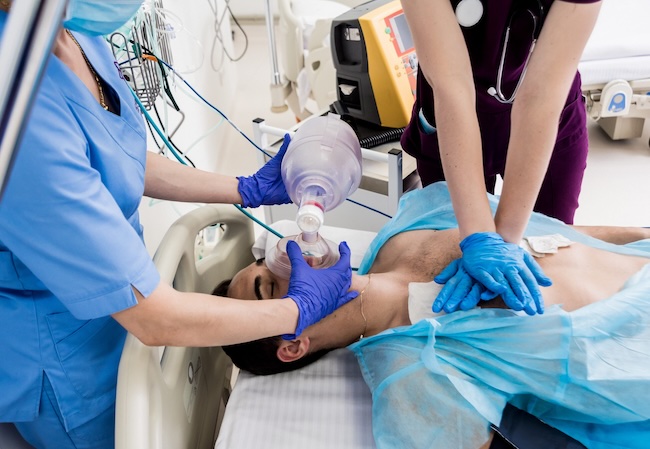
In early 2023, my daughter coded, and despite having all the right advance care paperwork in order designating that she should not be revived, she was hospitalized and resuscitated without my knowledge — until after it was over, and I received a phone call telling me what had happened, and where she was.
Becca was 47 years old, and had been bedridden in a nursing home for almost a year at that point, due to advanced, progressing MS and kidney disease. She wanted to die; she was in pain, and knew she had no quality of life to look forward to. More than a year prior to that day, we had brought in professionals to develop all the necessary paperwork to make sure she would not be kept alive if/when something happened. Copies of the paperwork had been provided to me, to the nursing home, and to the hospital.
And yet – I got that phone call, telling me she had been rushed to the hospital, that she was septic, and that I needed to come right away. When I arrived in her room, they had already begun treating the sepsis.
I was furious. It’s difficult enough to see your child so very sick, in pain, and often delirious when she was conscious, to feel totally helpless, and further, to know that her choice to die was fair and understandable.
But when I asked why she was even there, much less being treated, they told me that was their job. What?? When I told them THEY had copies of her DNR, they said they didn’t look – they assumed that since the nursing home called for EMTs, the nursing home had already determined that was the right protocol. Of course, by then, it was already too late to stop treatment.
When she finally started to come to and comprehended what had happened, Becca was SO upset! She was angry (at me!) because she had been treated. But in truth, she was angry at the world. A few days later, they sent her back to the nursing home.
Here’s What Happened Next
What now had to happen was that Becca and I both needed to make a big friggin’ deal out of the fact that the nursing home had called the EMTs at all. There was no valid excuse!! But the challenge was that the very people who caused the problem to begin with, were also the very people who would continue to be Becca’s caregivers.
Making the loud noises that needed to be made could very well cause them to – what – neglect her? Dismiss her needs? “Forget” to feed her? The concern was more about her comfort than her real care….
Becca’s decision was – yes – MOM – please do what you need to do to make sure this doesn’t happen again.
And she, heartbreakingly, continued to suffer, knowing her wishes had been ignored.
An Ocean of Waves
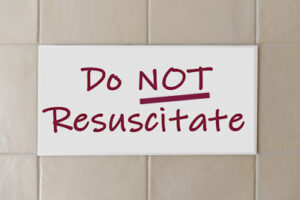
And so I did. I created an ocean of waves. I sat with the director who could only apologize, of course. I made sure Becca’s DNR instructions were taped to the cover of her binder. I sat with the LPNs as we went through their entire electronic system and put DO NOT RESUSCITATE at the top of every page of Becca’s paperwork. I spoke individually with the CNAs. I wrote a letter to the management company (and – no surprise – never heard back from them.) I posted large signs above her bed, and on the wall opposite, that said DO NOT RESUSCITATE, then taped a copy of the DNR orders to each sign.
Ten months later, still in the nursing home, but now with hospice services, Becca began heavy agonal breathing, and I got a call from one of the nurses.
“Becca is having trouble breathing and we’ve called the EMTs for transport.” she told me.
“NO.” I yelled into the phone. “She does not want to be resuscitated! Do NOT transport her! LOOK AT THOSE SIGNS!“
The nurse moved the phone away from her mouth, and yelled to a colleague “THE MOTHER SAYS NO! Leave her here. LET HER DIE!”
(Yes. I’m serious.)
I was upset and scared and furious! But I replied only that I was on my way, My husband and I jumped into the car and flew to the nursing home. Our usual 35 minute trip took about 20 minutes.
The hospice nurse was there. Becca was not conscious as near as we could tell, was breathing disturbingly and heavily, with ever increasing pauses. The nurse walked us through the process, while we held Becca’s hand and spoke to her as soothingly as possible. We called her sister, my younger daughter, so she could know exactly what was happening, and could add her voice to the soothing noises. In the end, Becca passed, as peacefully as she could have.
Heartbreaking, of course. And as I type all of this, I have to pause to see what I’m typing through my tears. There’s that PTSD rearing its ugly head again.
What can we all learn from this?
I share for a couple of reasons – personal – and to help advocates improve the services they deliver to their clients.
- Reading about someone else’s experience (both from Althea’s post and here) is a start. But neither story is YOUR story. I hope that our experiences can be loud warnings to YOU – so that you and your loved ones never have to suffer such traumatic consequences of not having shared your wishes with everyone and anyone in every way that might affect “the end.”

- As an advocate, I hope you will share with your clients quick overviews of these stories and encourage them (or encourage them to hire you) to be sure no stone is unturned in the communication of any advance directives created. Althea’s friend’s story, and mine, reflect the consequences of being smart enough to make sure the paperwork needed is in place, but the folly of not doing everything possible to communicate choices to any medical or caregiving personnel who might not realize it exists.
There are myriad reasons caregiving and medical personnel will want to resuscitate at the expense of a patient. Follow the money to figure them out.
Then know that YOU are the only person who can take steps required to be sure that does not happen. Do what you need to do to be sure it doesn’t.
 Content Authenticity Declaration
100% of this post was written by me, a human being. When there is AI (Artificial Intelligence) generated content, it will always be disclosed.


I write a lot of blog posts and never know the ripple effect they may have, so thank you for sharing your painful experience. It comes down to communication and vigilance. I’m so glad you made a lot of “waves.” Even if the company didn’t get back to you, rest assured, their legal team received your letter, and maybe they will consider more training. Sadly, suing is sometimes the only way to make them wake up to patients’ legal rights. We fight on, Trish.
So sad in our country we cannot accept death. Why? We all will die one day. Learning about death, talking about it, and accepting the person’s is the least we can do.
When someone goes on hospice they are say they want to be kept comfortable and allow natural death.
As a critical care nurse, I have seen many people die. Death can be beautiful when we honor the patient wishes.
Thank you for sharing your story. I pray all who took care of Becca learned from her experience. You were her advocate and made her wishes known.